Apps and web services, assembled with engineering precision.
We build mobile apps and web services, design interfaces, help you through publishing and support what is already live. But first we lay your task out in pieces — so you can see what it consists of and what depends on what.
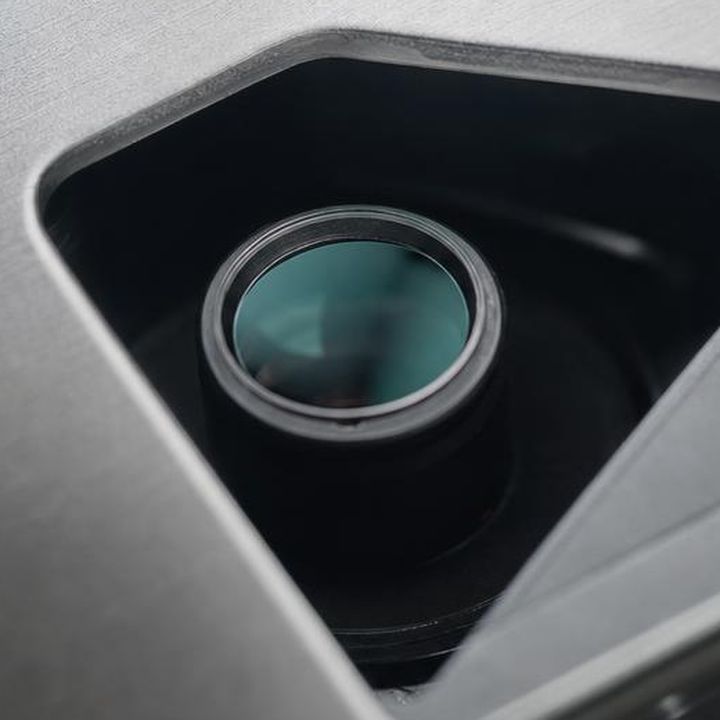
Illustration. Not our equipment and not a real project.
How we read a task
Anatomy of a single task
Even a plain phrase like “let people book an appointment” contains four different things. Naming them separately makes conversations about scope and timing more honest.
A
Input — what a person enters or picks, and what the system already knows.
B
Rules — conditions, limits and exceptions: days off, overlapping slots, cancellations.
C
States — draft, confirmed, cancelled, network error — each needs its own screen.
D
Output — what changes after the action: a database record, a notification, a report.
Services
Five disciplines we assemble work from
Order them separately or together. We will tell you honestly if one is not needed yet.
People come to us at different moments in a product’s life, and the first step differs for each. We do not push everyone through the same process: some need a prototype, some a code review, and some just a tidy reply to store reviewers.
An idea, no code yet
We start with a task map and a short prototype of the key flow. You get a list of modules, an order of work and the questions worth answering before development.
A live product that is hard to change
We review the current code and processes, mark risky spots and propose a sequence of changes that can be done in parts without stopping the service.
A release stuck in store review
We read the review notes, compare them with the requirements and prepare fixes and texts. We cannot promise the outcome — the store decides — but we make the submission tidy.
Hours
Are we available right now?
Working hours are Monday–Friday, 09:00–18:00 Kyiv time. The indicator below calculates this in your browser with no server request. It does not account for public holidays or unexpected breaks.
You describe the task in your own words. We ask clarifying questions in writing so nothing gets lost.
Map
We split the task into modules and mark dependencies and unknowns.
Proposal
Scope, stages, what is in and what is not. Estimates come as ranges with reasons.
Iterations
Short cycles that show working results rather than percentage reports.
Release
Check against criteria, prepare for publishing, hand over access.
After
Support by agreement, or a clean handover to another team with documentation.
Quality
Criteria we check ourselves against
Not a seal or a certificate — a working list. We walk through it before every release and show you the result: what was checked, what was not and why. The full twelve-item list is on the quality page.
Quality criteria
Criterion
What it means
Checked
Clear without us
Someone who missed every meeting understands the screen in a minute.
yes
Errors are named
Every error says what happened and what to do next.
yes
Keyboard and contrast
The interface works without a mouse; text is readable in sunlight.
yes
Slow network
We check behaviour on weak connections and when they drop.
yes
Handover-ready
Code, access and instructions can be handed over without us.
When a task is one sentence long, any number is a guess. When it is broken into modules with dependencies, each part can be estimated on its own and uncertainty becomes visible: here we know almost everything, there we still need to talk to a payment provider or to the people who will use the product. You see where the range comes from and can narrow it deliberately.
The first version is easier to trim
The map shows which modules carry the rest and which can wait without harm. It often turns out that an admin panel can be a spreadsheet for the first months, and notifications can be an email. Such decisions are made calmly when the whole structure is visible, not in the last week before launch.
Changes don’t break everything
The product will change — that is normal. If the pieces are joined honestly and documented, replacing one does not mean rewriting the others. That is why we insist on diagrams: not for presentations, but so that a year later any team, including one that is not us, can understand what lives where and why.
Honestly
What we don’t do
We do not promise that an app passes store review on the first try.
We do not name a fixed price before seeing the task.
We do not invent case studies, clients or awards for this site.
We do not build industrial robots or hardware — the “robo” in our name is about systems, not metal.
Tools
Three tools you can use without us
All three run right in your browser and send nothing anywhere. Copy their results into a message or simply use them for your own planning, even if you never write to us.
Professional terms help only when both sides read them the same way. If a word in our message is unfamiliar, ask — we will explain it plainly and perhaps add it to the guide.
We do not hide behind jargon. Here are the four you will hear most; the rest are in the guide.
The smallest version of a product that already helps real people. Not a “rough draft” but a deliberately trimmed scope.
An ordered list of tasks. Order matters more than length.
A build tested as if final. If a bug turns up, there is a next candidate.
“For now” decisions that later slow changes down. Having it is fine; not knowing where it lives is not.
Questions
Questions before the first message
Yes. Often the best start is a single flow or a review of an existing product. It shows both sides how working together feels.
Yes, after a review. We tell you what we found and suggest where to begin — even if the answer is “documentation first”.
Ukrainian or English, whichever suits you.
What the product should do, for whom, what exists already and any time limits. Do not send passwords or confidential data through the form.
Contact
Where to find us
We work remotely, so the best way is to write. We reply during working hours; weekend messages wait for Monday.
The address below is the legal address from public records, not a meeting office. If an in-person meeting is truly needed, we arrange place and time by email in advance.
Address is for reference, not a walk-in office. 69041, Україна, Запорізька обл., місто Запоріжжя, вулиця Синенка Сергія, будинок 77, квартира 14. Search this address on OpenStreetMap (opens a search, not a confirmed pin).
MON–FRI09:00–18:00Europe/Kyiv
Show us a task — we will show you what it is made of.
We use no analytics or trackers. The only optional feature is remembering what you typed into this site’s tools in your browser (localStorage). Your choice itself is also stored locally.